
Trends & Insights
·
January 13, 2026
Your Adblocking Recovery Setup. It’s Good Enough… Right?
Your Adblocking Recovery Setup. It’s Good Enough… Right?
Trends & Insights
·
January 13, 2026

compliant

Adblocking was last decade’s crisis.
No longer existential. More of a back-burner issue.
Why?
Consumer adoption appeared to plateau. Settling at levels that were uncomfortable, but survivable. Mitigation tools like Acceptable Ads and adblock walls softened the blow… sort of.
Revenue from this audience never returned to anything close to previous levels, but it was better than zero.
Over time, a quiet resignation set in. The prevailing belief became: this is as good as it gets. Adblocking can’t be solved — only treated as a cost of doing business.
Meanwhile, bigger fires broke out. Cookie deprecation. Traffic loss. One industry panic after another.
Against that backdrop, adblocking felt like a minor headache. Something you could set aside most days, and reach for the occasional adblock-recovery-laced aspirin when you had the headspace.
Sound familiar?
For a long time, that view was pretty accurate.
Today, it isn’t.
Adblocking no longer behaves the way it used too. The underlying mechanics have changed — dramatically, and for the worse. And through no fault of their own, publishers missed it.
I am not writing this to scaremonger. This isn’t about reviving old fears or reopening tired debates. It’s about recognizing adblocking has changed, without a corresponding shift in how it’s addressed.
This mismatch — between how adblocking is understood and how it works — represents a welcome new opportunity for publishers.
In short: there’s bad news, followed by great news.
The Bad News
Are you sitting down?
A segment of your audience is consuming your content for free, and they’re invisible to you. It does not appear in dashboards like Google Analytics, Adobe Analytics, or in-house reports. It doesn’t even show up in existing adblocking analytics. Off-grid.
This is dark traffic. You can’t see it. But it’s very much there.
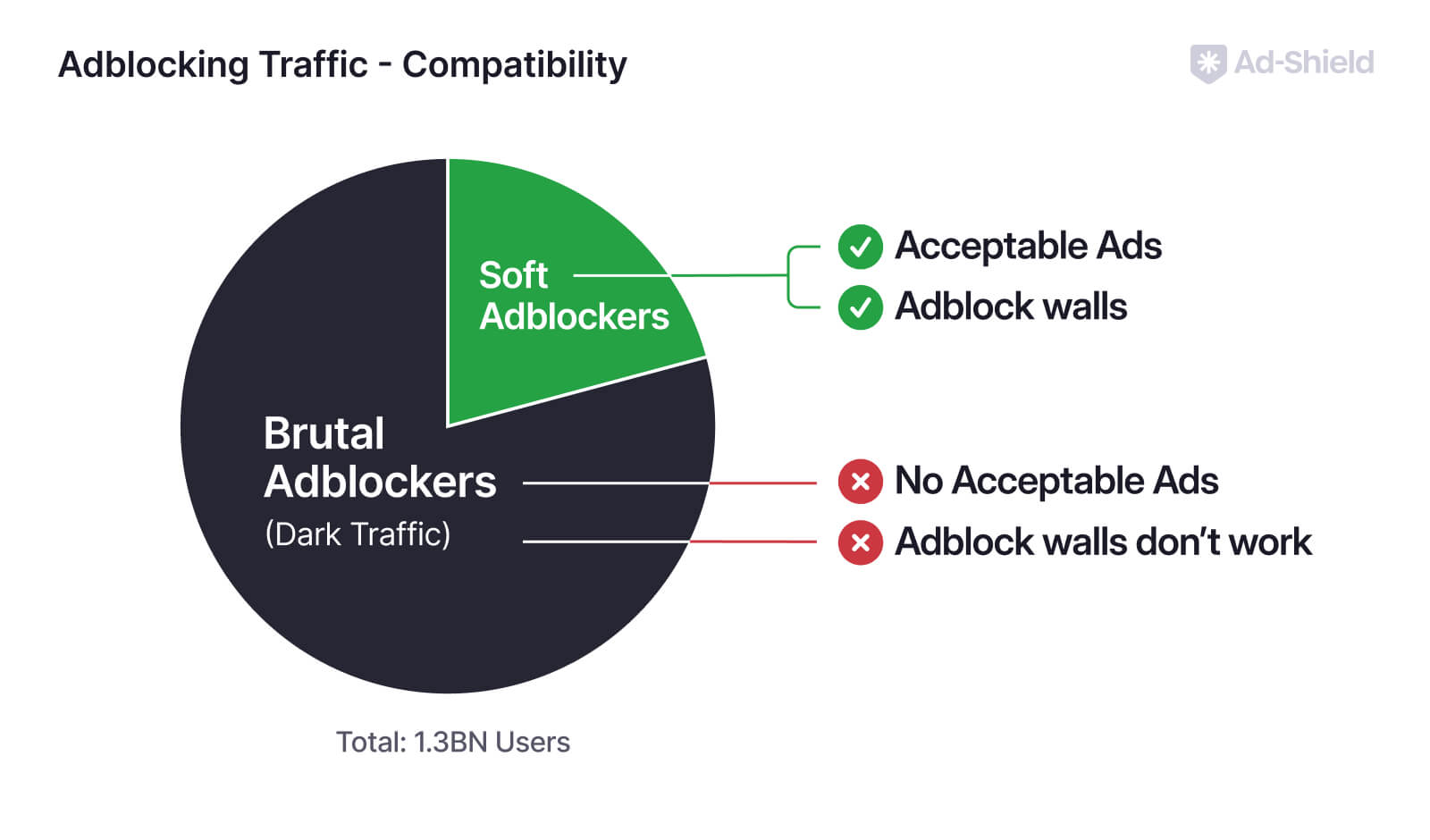
We are talking about big numbers here. On average, 18% of a publisher’s total audience is uncaptured and unmeasured dark traffic. 1BN users globally.
Put another way, the adblocking audience you are currently measuring is just 21% of what is actually there.
Sounds sinister? Yes and no. Dark traffic comprises regular people (not bots) accessing your website. People who buy stuff and have above-average disposable incomes. They are hidden from view because they are using a new generation of adblocking software that makes them undetectable by existing solutions.
This new generation of adblocking software doesn’t just block analytics. It also blocks or doesn’t permit a bunch of other monetization capabilities that publishers have come to rely upon: Acceptable Ads and adblock walls. Because this new generation is so ruthless, we call them brutal adblockers. The average publisher is losing 18% of their revenue as a result.
The Great News
There’s a positive side to this.
First, your audience is bigger than you thought it is.
Second, despite the rise of dark traffic, most users are not anti-advertising: 85% either expect to see ads or find certain types of ads tolerable.
That’s because:
- 59% expect to see ads. These users are unaware that adblocking is active on their device, or, they didn’t make the choice to adblock
- 26% find certain ad formats tolerable. 1 in 4 users find certain types of ads tolerable. They are not categorically opposed to ads, just those they deem intolerable
- Total = 85%
With Ad-Shield, you can measure your dark traffic audience and monetize it with ads. This is net new revenue. Generated from recovering your existing ad stack, or, plugging into our ad demand.
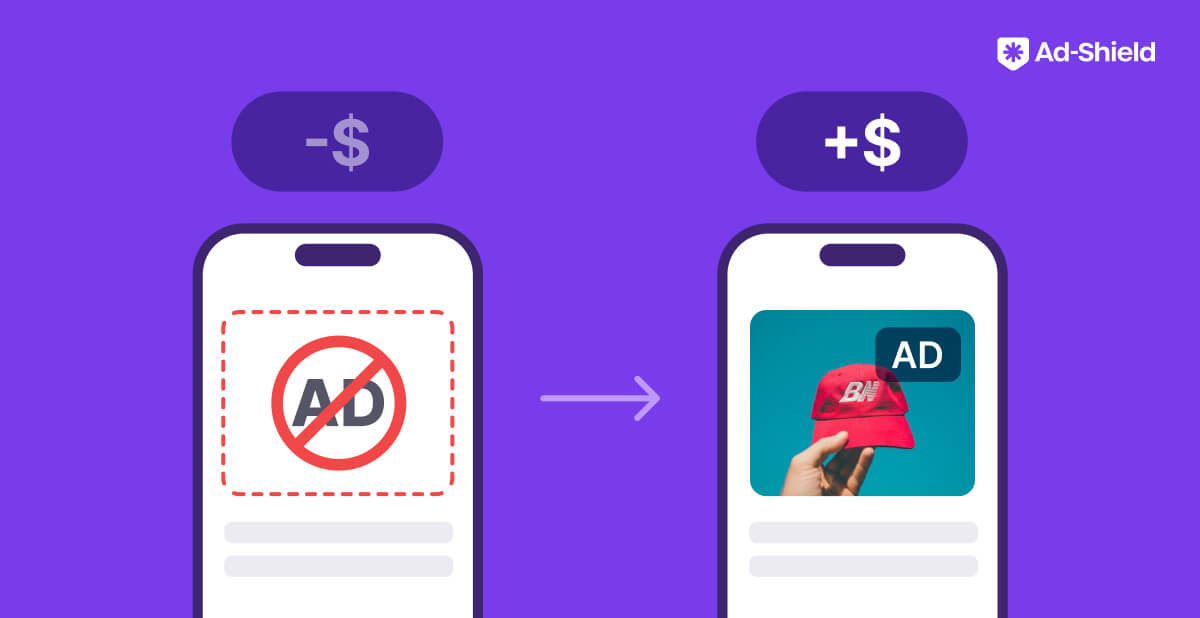

Ad-Shield enables open web publishers to measure and monetize the 79% of adblocking traffic that is not captured by their existing adblock recovery stack.
Most publishers see a 4-5X adblock revenue increase.



.png)

