Trends & Insights
·
December 15, 2025
Is It Ethical To Serve Ads To Adblocker Users?
Is It Ethical To Serve Ads To Adblocker Users?
Trends & Insights
·
December 15, 2025
.png)

compliant

“Adblocking is a personal preference. We can’t force ads on people who have chosen to opt out.”
If you’re reading this, I assume that’s your perspective. Serving ads to adblocker users just doesn’t sit right — it feels unethical or illegitimate.
You know what? I agree. We are both on the same page.
Why do I say that?
Most of the time I hear publisher executives say this, it’s because a set of assumptions are doing the work behind that view:
- Users actively chose to block ads
- All ads are considered intolerable
- Users are morally against ads
Based on this, it’s perfectly reasonable to draw the conclusion that serving ads to adblocker users is a questionable practice.
But, those assumptions do not match reality. In fact, the situation is the exact opposite.
How so? Let’s breakdown each, one-by-one:
Assumption #1: Users actively chose to block ads
Status: False ❌
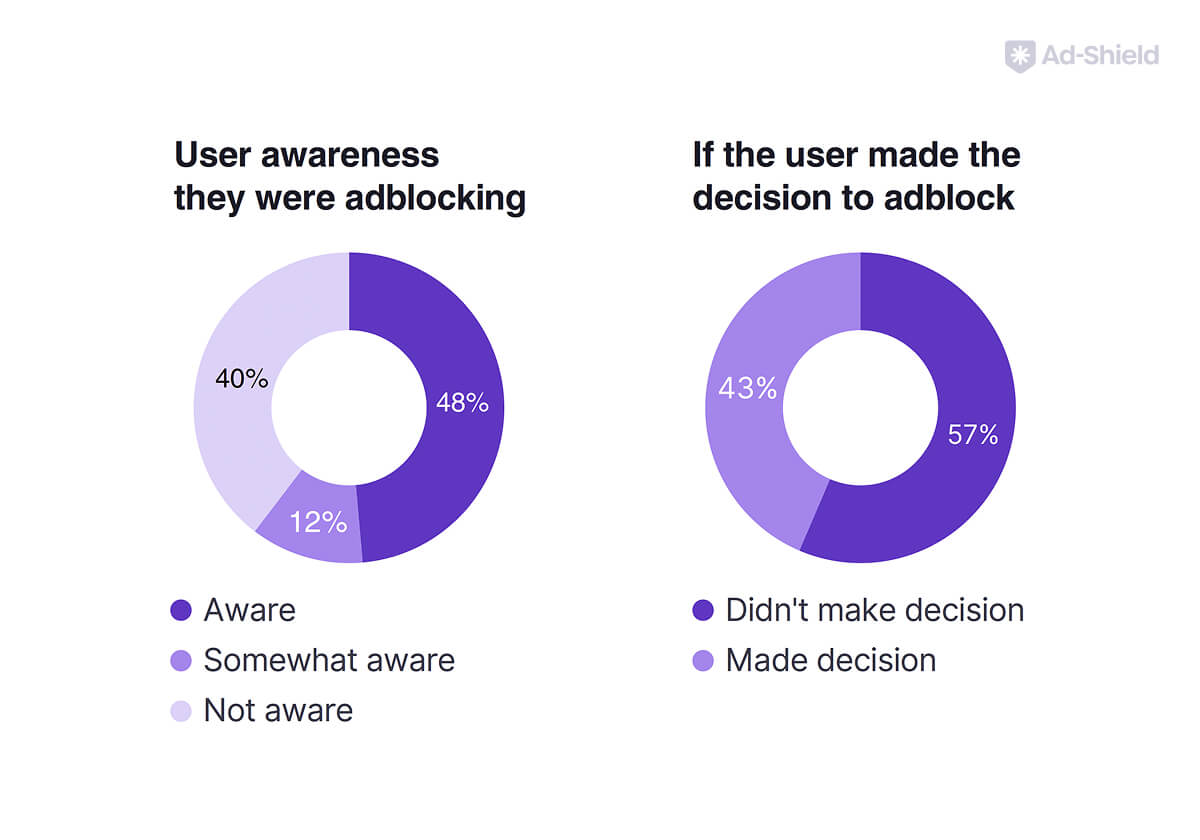
Here’s a fact that may surprise you: 57% did not make the decision to block ads. These are users who did not seek out an adblocker and install it.
Therefore, if they didn’t make the choice to block ads, serving ads to them is not against their personal will or preference. In fact, the opposite is true — they expect to see ads. 52% aren’t aware they’re blocking ads, so seeing ads feels normal to them.
You’re now probably thinking: “How can that be? How can someone be using an adblocker if they didn’t choose to install it?”
Adblocking has changed. It’s no longer a Chrome extension phenomenon driven by consumer installs.
Most adblocking now occurs as a result of IT Managers working inside organizations: companies, government departments, educational institutions, and public wifi locations, etc.
In this context, adblocking is deployed at an organisational level. It’s default-on for everyone. Users have no choice in the matter, and in most cases are neither asked nor informed about it.
.jpg)
Assumption #2: All ads are considered intolerable
Status: False ❌
Ads are not all the same. Some formats are considered intolerable, others are considered tolerable.
We asked adblocker users what type of ads they find the most disruptive or frustrating. There was a strong theme in the answers we received: 71% stated formats that obstruct their content consumption experience, such as:
- Video ads that play before content
- Image ads situated over content
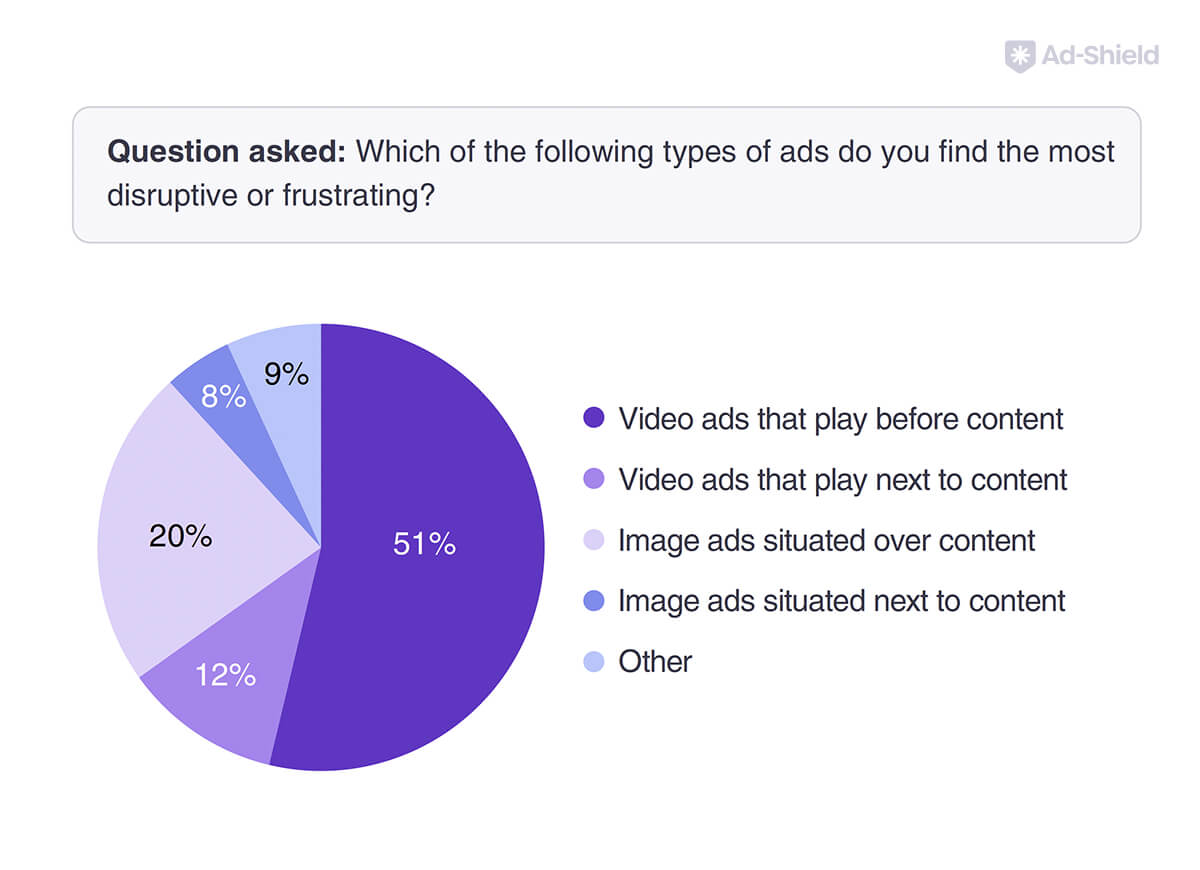
By contrast, ads that do not interrupt content consumption are generally considered tolerable. For example: banner and video ads that load adjacent to the content. That creates an agreeable experience.
Remember: Adblockers are blunt instruments. They block all ads by default, including tolerable formats. Ad-Shield reinstates tolerated formats.
Assumption #3: Users are morally against ads
Status: False ❌
The stereotype of an adblocker user is a militant ad hater: a tin-foil-hat wearing software developer determined to live outside the “surveillance economy.”
For them, adblocking isn’t just a tool to enhance their web browsing experience. It’s a weapon that helps uphold their moral code. Serving ads to them is a bit like serving meat to a vegetarian. It will never go down well.
I’ll be honest: this type of adblocker user does exist. But, they’re an extreme minority — less than 0.25% of users.
Even that may make you cautious. That’s understandable. We have a solution: these users are technically proficient and can modify their devices to remove ads recovered by Ad-Shield. We don’t attempt to override this. We allow it. This keeps the peace.
What about everyone else? The remaining 99.75%.
They’re just normal people — teachers, office workers, moms, students. They’re not blocking ads out of moral opposition. They’re blocking ads because:
- An IT Manager set it up. Activated outside of their control.
- They can. It’s free, legal, and easy to install.
Let’s be clear: most people would rather not see ads if that’s an option. That doesn’t make it a moral choice, it just makes it convenient.
And when it’s not an option? No big deal. Ads load. Life carries on.
Consider this analogy: there’s a vending machine that gives out free chocolate if you know a special code.
When the code stops working, are those people that used the code morally opposed to paying? Of course not. They just think: “That was nice while it lasted!” Then they buy chocolate.
That’s exactly what we see with attitudes towards advertising, in publisher data.
User sentiment towards recovered ads
Status: Legitimate ✅
Let’s recap:
- The majority of adblocker users did not choose to block ads
- Certain formats of advertising are considered tolerable
- Adblocker users are not morally against ads
If we put this all together, what do we get?
An actionable number: 85% either expect to see ads or find certain types of ads tolerable.
Here’s how that breaks down:
- 59% expect to see ads. These users are unaware that adblocking is active, or, they didn’t make the choice to block. They therefore expect to see ads.
- 26% find certain ad formats tolerable. 1 in 4 users find certain types of ads tolerable. They are not categorically opposed to ads, just those they deem intolerable.
- 15% find no ad formats tolerable. A minority of users do not find any advertising experiences tolerable. If they feel strongly enough about this, they take steps to remove the ads locally on their device.
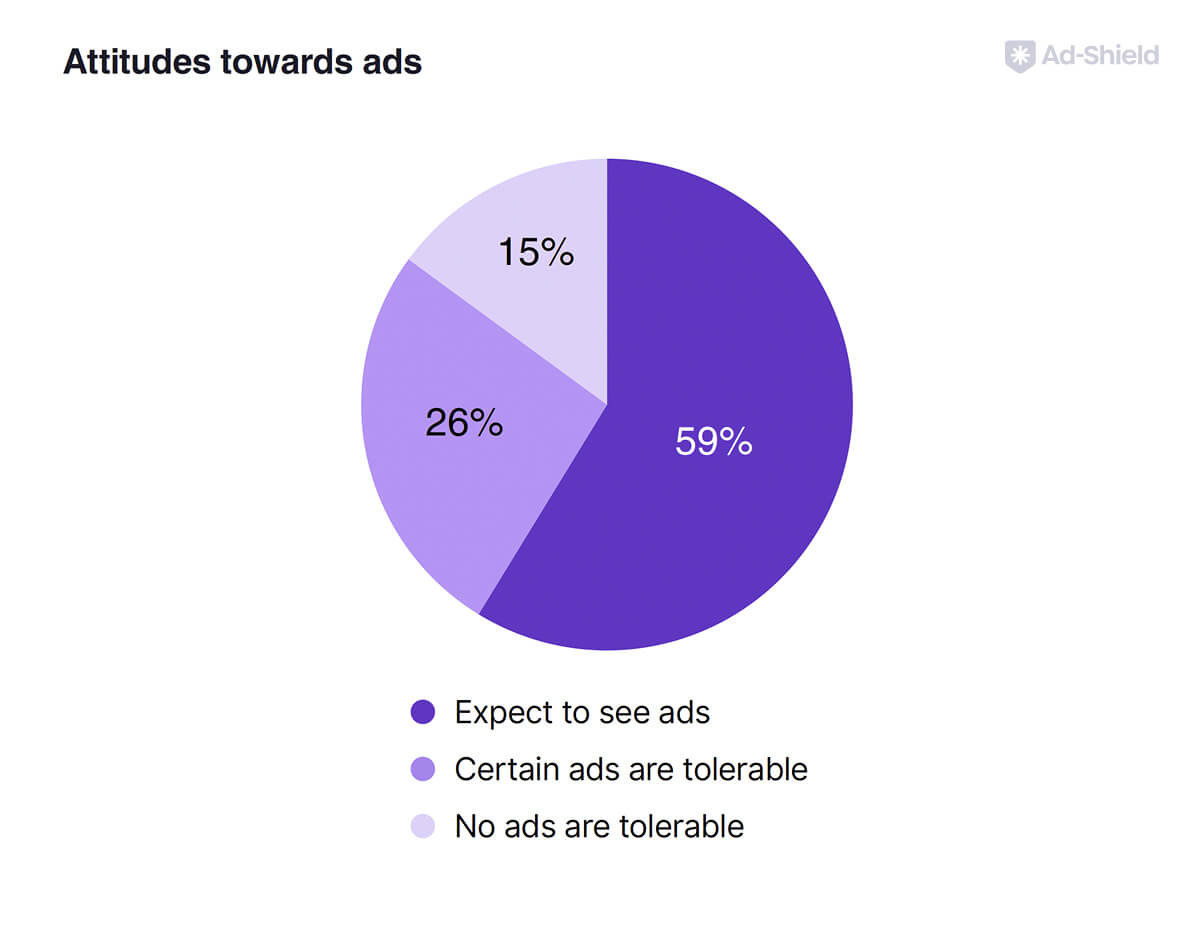
Takeaway: Recovered ads are not imposed against user will. They are shown to users who either expect advertising to be present, find certain formats tolerable, or see adblocking as a convenient bonus if it works, not a moral necessity.
That combination — expectation, tolerance, and convenience — provides a legitimate basis for reintroducing ads to adblocker users.

Ad-Shield enables open web publishers to measure and monetize the 79% of adblocking traffic that is not captured by their existing adblock recovery stack.
Most publishers see a 4-5X adblock revenue increase.

.png)