
Trends & Insights
·
March 26, 2026
Will Restoring Ads For Dark Traffic Harm User Experience?
Will Restoring Ads For Dark Traffic Harm User Experience?
Trends & Insights
·
March 26, 2026
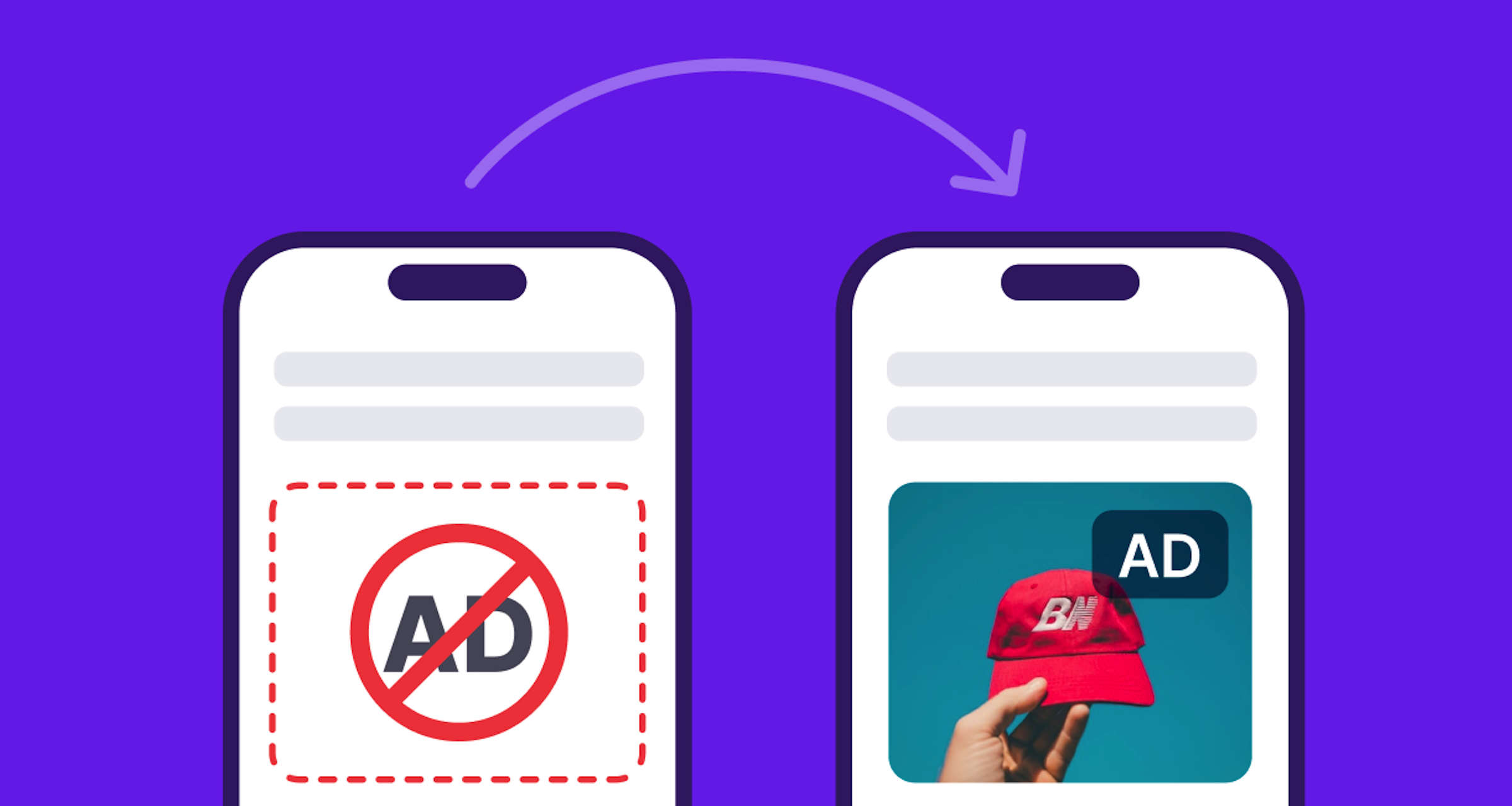

compliant

It's a fair question. And for publishers who have spent years building a loyal, engaged audience, it's the right question to ask.
When the topic of ad recovery comes up, UX-conscious publishers tend to land in the same place: "We're not against the revenue. We're against doing anything that damages the relationship we have with our readers."
That concern is legitimate. It is also, in most cases, based on a misunderstanding of who is behind dark traffic and the reasons why it exists.
85% of dark traffic expects to see ads or finds certain formats tolerable
According to Ad-Shield's Dark Traffic Report, 85% of people causing dark traffic either expect to see ads or find certain ad formats tolerable. Here's why:
• 59% never chose to block ads. IT departments, corporate networks, workplace devices, and public WiFi deploy adblocking without the user's knowledge or consent. These people expect a normal web experience — because as far as they're concerned, that's what they have.
• 26% installed an adblocker to remove the most disruptive formats — unskippable pre-roll video, overlays, autoplay. They are open to seeing non-intrusive advertising. They opted out of a bad experience, not advertising itself.
• Only 15% have a strong objection to all advertising. Ad-Shield does not actively pursue recovery for this group. More on that below.

Recovery is user selective by design
The adblocking landscape is highly fragmented — DNS-level blockers, VPNs, apps, browsers, security software. A sophisticated recovery strategy doesn't attempt to recover from every adblocker indiscriminately.
Ad-Shield's approach:
• Recover where there is clear user tolerance. IT-level environments, bundled solutions, default opt-ins — audiences where blocking was never an explicit user choice.
• Don't recover where it isn't warranted. Users who have made an active, ideological decision to block all advertising represent a minority of people causing dark traffic. Ad-Shield takes steps to minimize exposure to this group and does not actively pursue recovery for them. It is not in the mutual interest of publishers or users to do so.
This selectivity is not a limitation. It is what makes ad restoration compatible with a premium user experience.
Your ad stack. Premium experience.
Ad-Shield doesn't introduce new types of ads from untrusted sources or override your existing setup.
What it does:
• Restores your existing ad stack. Your ad experience wasn't the problem. It simply got caught in a blanket block triggered by another reason (often, to remove YouTube Ads).
• Uses your demand. Your blacklists, your formats, your controls — nothing changes
Publishers who have carefully calibrated their ad stack to balance monetization and user experience are rewarded for their efforts.
For this reason, we only work with publishers who have built ad experiences that meet a sustainable UX standard. That standard is what gets restored.
Better Ads, better experience
Because Ad-Shield works exclusively with quality publishers, the ad experience being restored is already one that has been built with a discerning audience in mind.
On top of that, Ad-Shield only restores ad formats that comply with the Better Ads Standards — the same framework the broader industry uses to define user-friendly advertising.
What this means in practice:
• No autoplay video
• No interstitials
• No overlays or pop-ups
• No ad formats that obstruct content
This ensures the restored ad experience keeps within boundaries users find tolerable.
Two Years. No audience pushback
Ad-Shield is currently live on 5,000+ publisher sites, with activation dates going back to 2024. In that time, there has been no audience pushback or mass revolt attributed to restoring ads.
85% of people causing dark traffic are passive about seeing ads — it isn't something they particularly care about. We choose not to pursue ad restoration for the remaining 15%.
As with any product in the world (even chocolate ice cream coated with sprinkles), there will be examples of people that are dissatisfied and voice their concerns.
Across the thousands of websites we restore ads for, we hear of less than 15 reported complaints per month. Most are 0.
The real UX risk is inaction
Think about it from another perspective.
Leaving 6-14% of your audience unmonetized makes holistic monetization harder. That pressure to monetize has to go somewhere.
And where it tends to go is onto the audience you can see and measure. That's your non-adblocked audience, which assumes the burden of content compensation for everyone.
Recovering dark traffic responsibly relieves that pressure. It distributes the monetization load more evenly across your full audience.
The bottom line
Your UX-first approach is a competitive advantage. It's worth protecting. But protecting it doesn't mean leaving revenue on the table from an audience that, by and large, has no objection to seeing ads.
Ad-Shield is designed for publishers who care about both. The two are not in conflict.
Recap:
• 85% of dark traffic is ad-tolerant — most users expect or accept ads
• Majority didn’t choose to block ads — often driven by IT, networks, or default setups
• Recovery is selective — focused only where user tolerance is clear
• Your existing ad experience is restored — trusted demand sources, UX-friendly ad formats
• Inaction is the real UX risk — it funnels monetization pressure onto visible, non-adblocking users

Ad-Shield enables open web publishers to measure and monetize the 79% of adblocking traffic that is not captured by their existing adblock recovery stack.
Most publishers see a 4-5X adblock revenue increase.

.png)

