
Trends & Insights
·
March 27, 2026
What Makes Ad-Shield Different For Adblock Recovery?
Ad-Shield vs. Blockthrough vs. Adblock Walls
What Makes Ad-Shield Different For Adblock Recovery?
Trends & Insights
·
March 27, 2026


compliant

You're probably familiar with Blockthrough and "turn off your adblocker" wall providers. Maybe you're using one of them. Maybe you've tried both.
They're the industry defaults. And for a long time, they were the main game in town.
Here's the problem: the playing field has changed. And neither of them changed with it.
The Adblocking Landscape Has Split In Two
Not all adblocking traffic is the same. There are now two distinct types. Which ones your recovery solution can handle is the most important consideration.
Gray traffic (21% of adblocking traffic) is generated by soft adblockers like AdBlock and Adblock Plus, owned by eyeo. These tools block ads, but they allow analytics scripts to run, adblock walls to display, and Acceptable Ads to pass through.
Dark traffic (79% of adblocking traffic) is generated by a newer generation of brutal adblockers — uBlock Origin, AdGuard, Brave, NordVPN, and hundreds more. These block everything: ads (including Acceptable Ads), analytics, adblock walls, cookie banners. A visit from a brutal adblocker user often leaves zero trace in your dashboard.

For many publishers, the current understanding of adblocking stops at gray traffic. Unfortunately, that understanding is about five years out of date.
Where Blockthrough Falls Short
Blockthrough works by its relationship with Acceptable Ads. This is a mechanism run by eyeo that allows certain ad formats to pass through their own adblockers.
The catch: Acceptable Ads mostly only works with eyeo's products (Adblock Plus and AdBlock). These products now represent just 21% of adblocked page views.
The remaining 79%? Brutal adblockers. They don't participate in Acceptable Ads. Which means Blockthrough generates $0 from the majority of your adblocked audience. It also doesn't report many of those page views in its analytics. So you don't know they are there.
That's the Blockthrough blindspot.

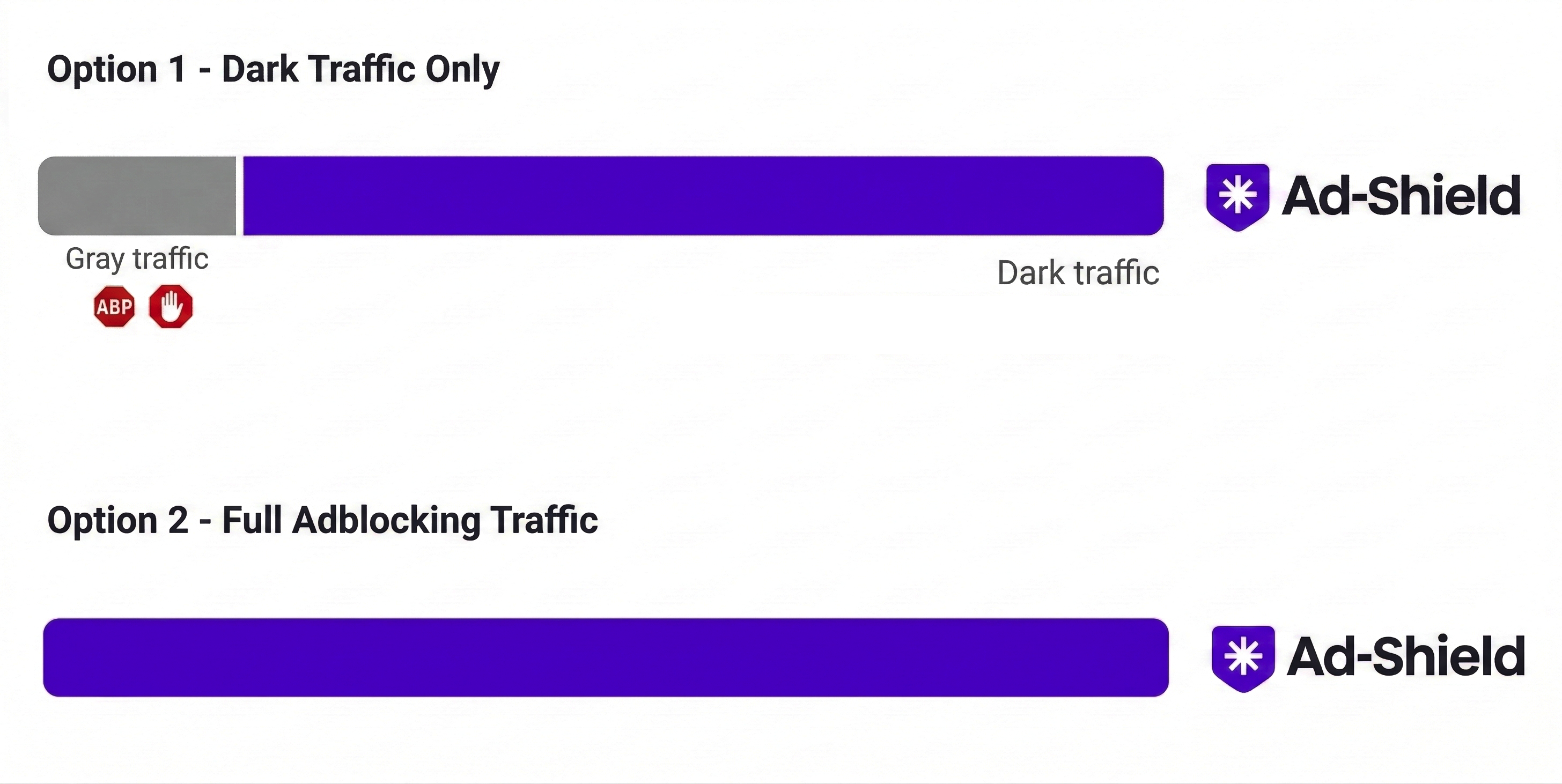
If you are using Blockthrough, there are two ways you can use Ad-Shield:
- Option 1. Ad-Shield monetizes dark traffic by restoring ads, running alongside Blockthrough which continues to monetize gray traffic (soft adblockers)
- Option 2. Ad-Shield monetizes both gray and dark traffic, replacing Blockthrough entirely
Most publishers start with Option 1, then move to Option 2 within 3 months — once they see the superior CPMs.
Either way, it's net new revenue from an audience you're currently leaving on the table.
Where "Turn Off Your Adblocker" Walls Fall Short
Adblock walls take a different approach: display a "turn off your adblocker" message, and hope for the best.
Against dark traffic, this fails on two levels.
First, 51% of dark traffic never see the message at all. Brutal adblockers suppress it entirely.
Second, 57% can't disable their adblocker even if they wanted to. It was force-installed by an IT department, a corporate VPN, or an enterprise browser policy. These users didn't choose to block ads. They can't turn it off. Asking them to is futile.
End result: 80-90% of dark traffic users don't disable their adblocker. Adblock walls recover $0 from them.

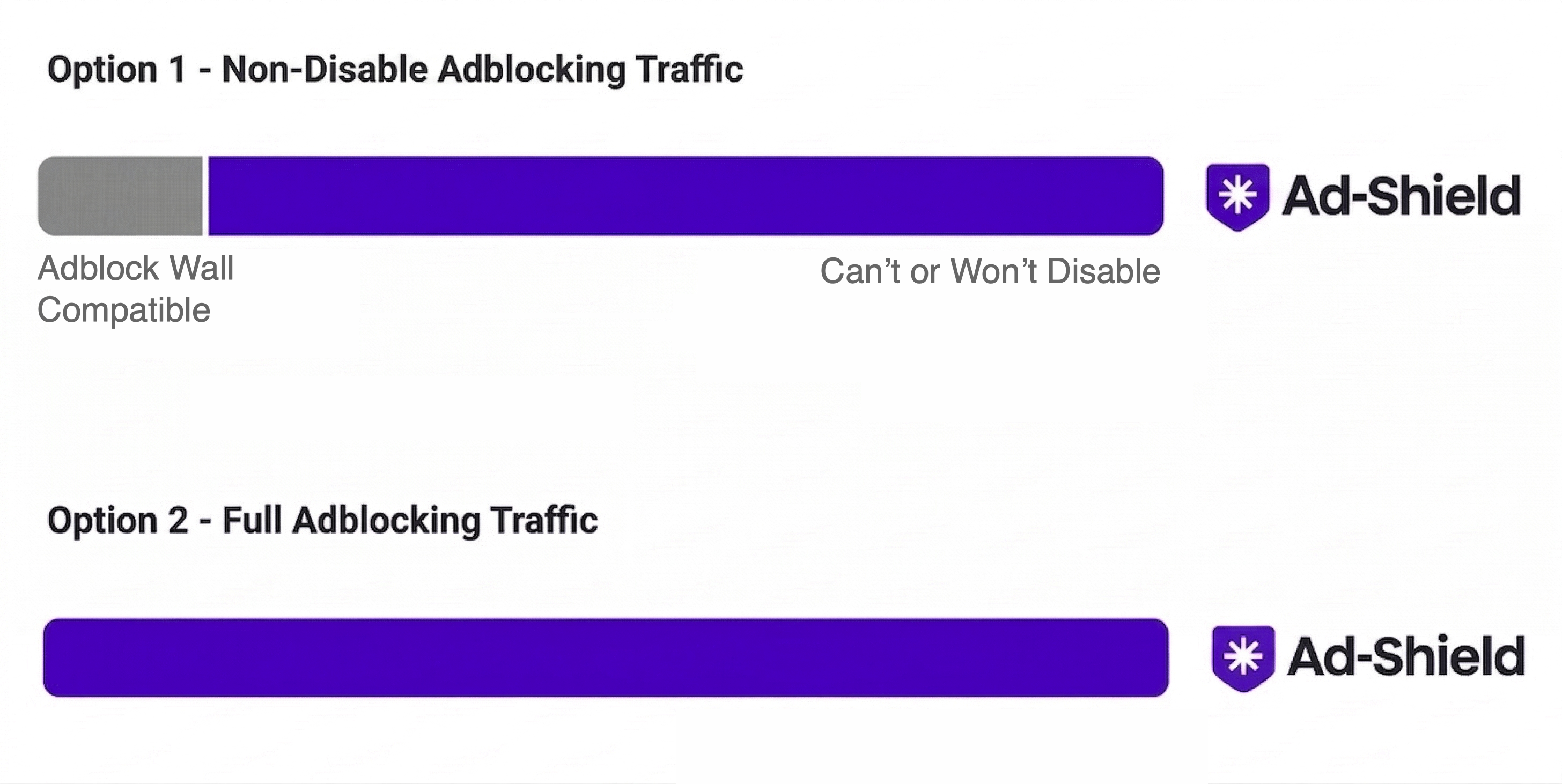
If you are using an adblock wall, there are two ways you can use Ad-Shield:
- Option 1. Your adblock wall stays in place. For the 80-90% of people causing adblock traffic who ignore the wall or never see it, Ad-Shield monetizes those page views by restoring ads
- Option 2. Ad-Shield monetizes both gray and dark traffic, replacing your adblock wall entirely
Either way, it's net new revenue from an audience your adblock wall was never designed to monetize.
What Ad-Shield Does Differently
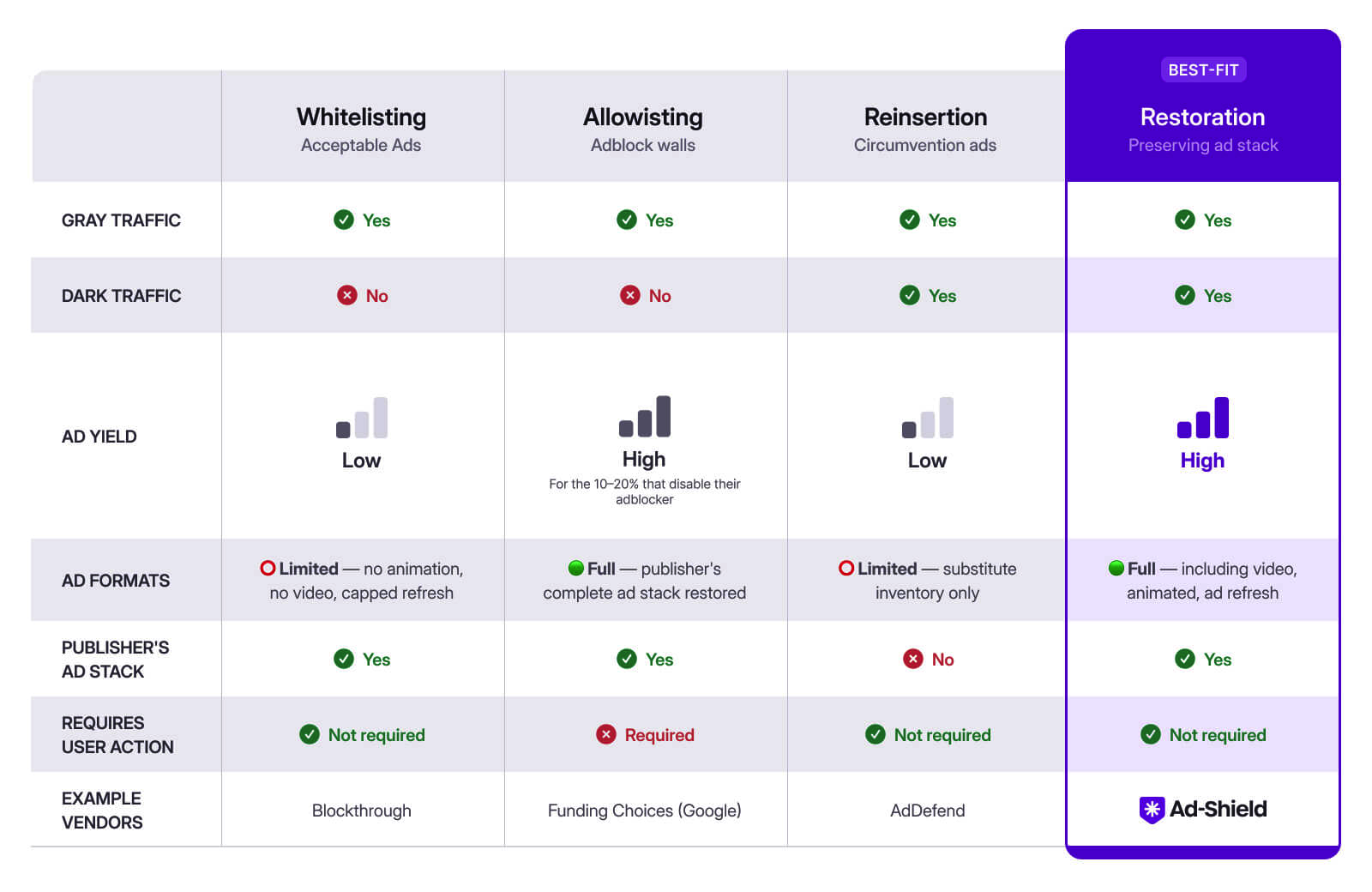
Ad-Shield uses a method called restoration — the only approach that addresses both gray and dark traffic at high-yield.
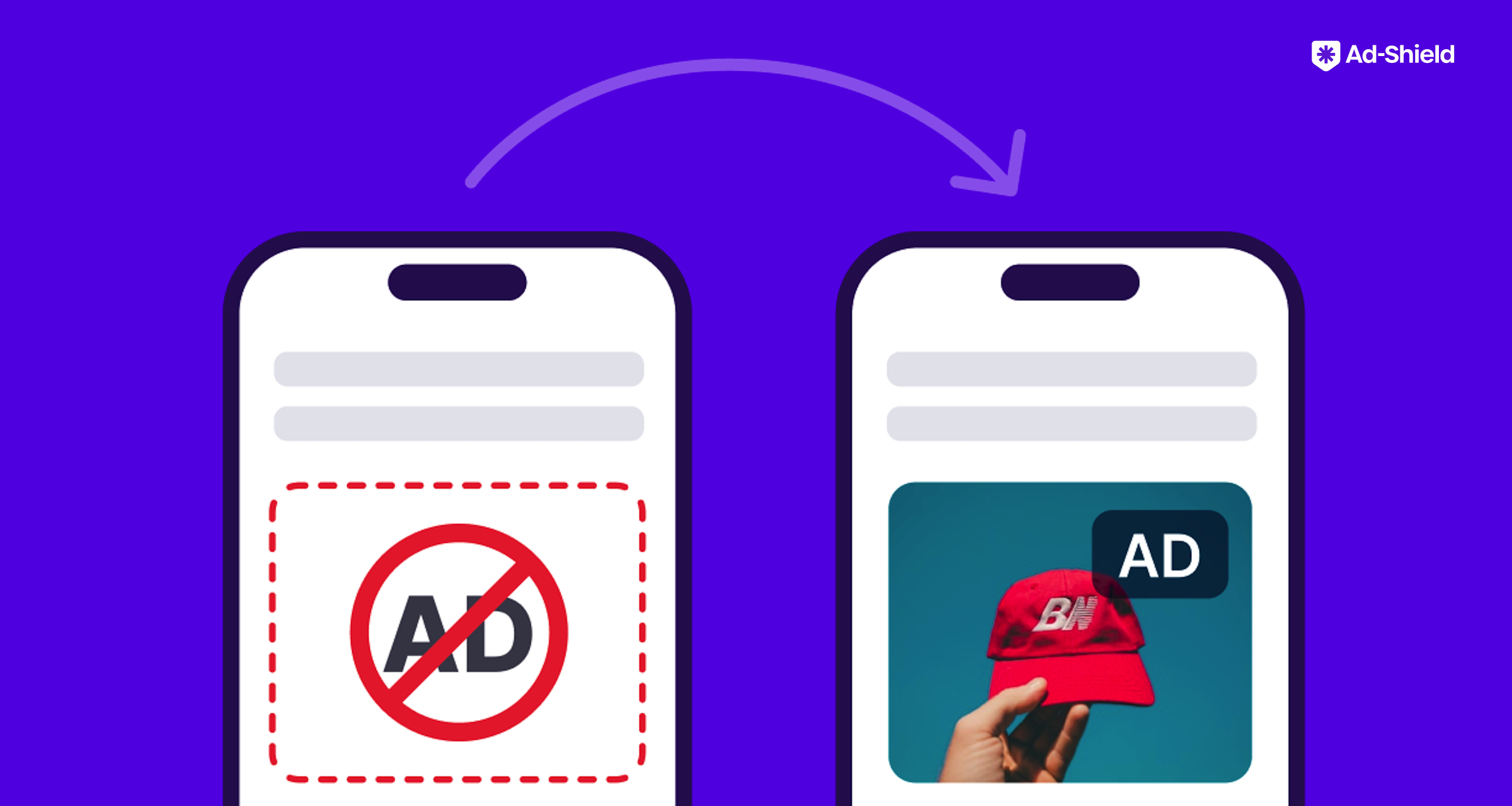
Rather than relying on adblocker cooperation (Acceptable Ads) or begging users (adblock walls) to recover ads, Ad-Shield restores the publisher's own ad stack directly. GAM, Prebid, SSPs, and direct-sold are all reinstated, at the RPMs your demand relationships command.
No substitute inventory. No revenue share with adblockers. No asking users to do something they can't.
The Bottom Line
Blockthrough doesn't work on 79% of your adblocking traffic. Adblock walls doesn't work on 80-90%.
Ad-Shield monetizes the 79-90% they can't. Net new revenue. No disruption.
The audience is there. The revenue is there. The only question is whether your recovery solution is built to reach it.

Ad-Shield enables open web publishers to measure and monetize the 79% of adblocking traffic that is not captured by their existing adblock recovery stack.
Most publishers see a 4-5X adblock revenue increase.

.png)

